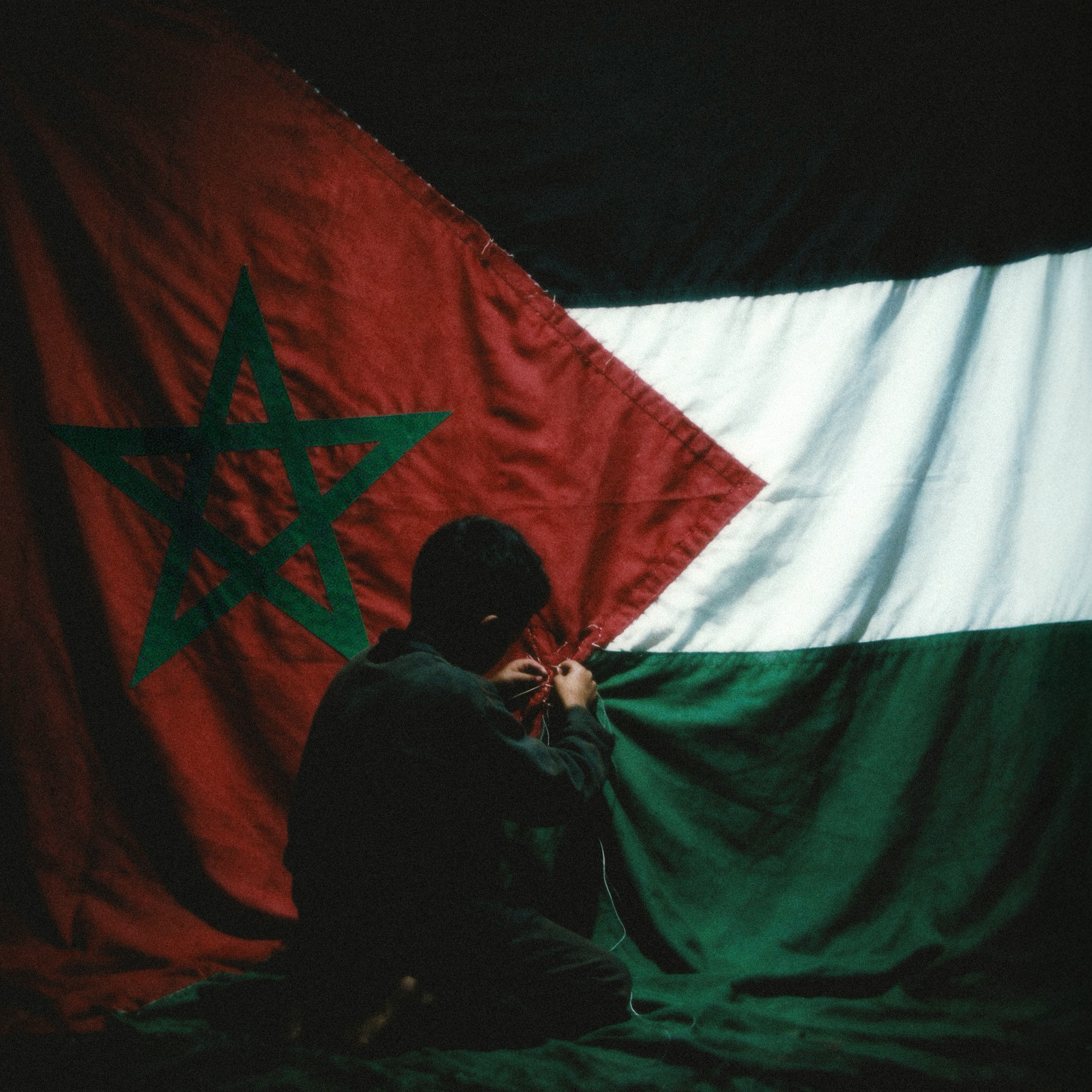
In “Marra”, languages intersect like human trajectories. French meets Darija. Intimate wounds collide with the upheavals of the contemporary world. “Because of laws, my choices, my faith…” The chorus gradually becomes a mantra for displaced lives, for those who keep moving forward with tears in their eyes without ever giving up on the light.
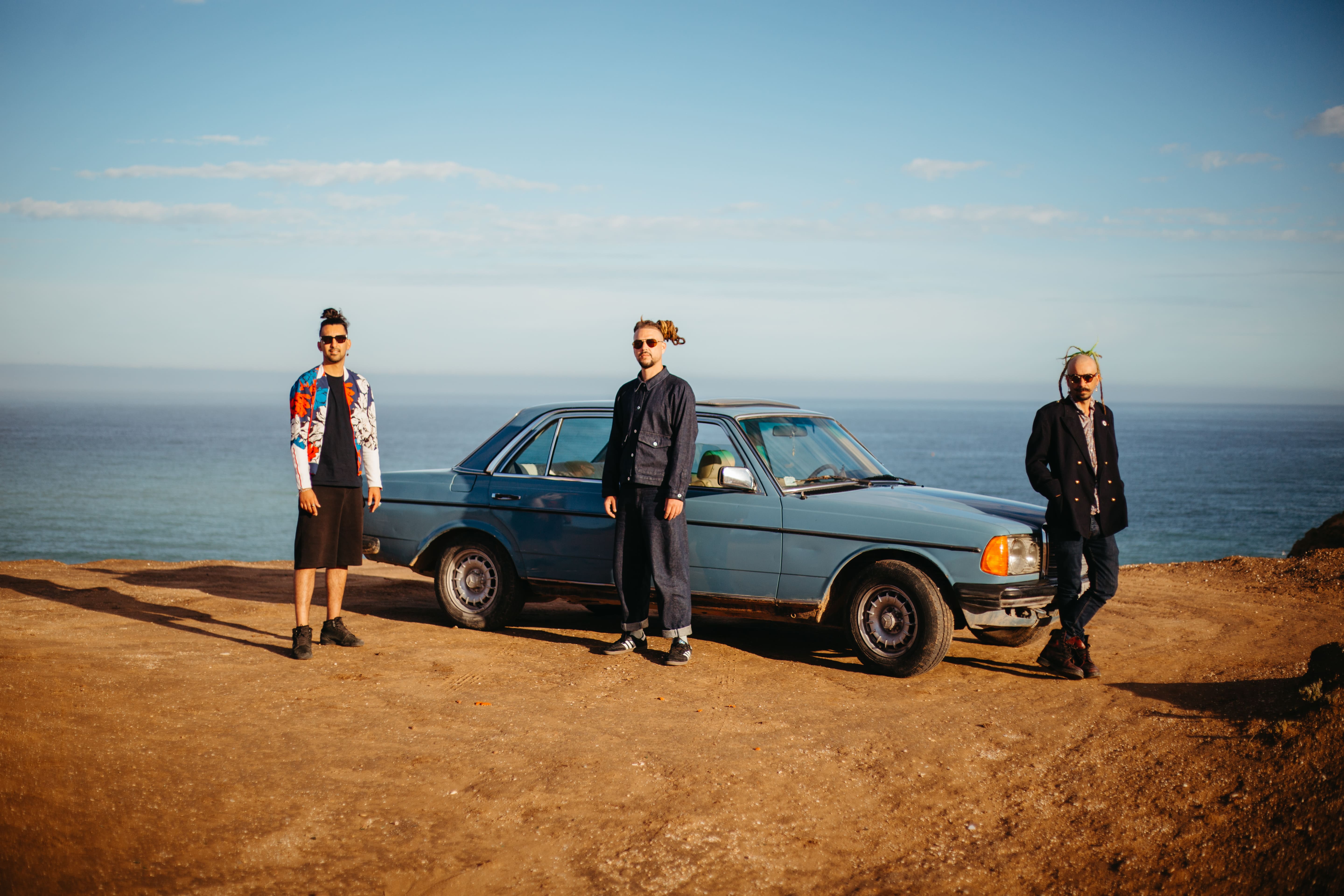
The music video accompanies this human material with a constantly shifting aesthetic. We see Steel Alive and Adil Smaali moving through the landscapes and streets of the Taghazout region all the way to the dunes of Timaline, between Atlantic light, everyday life scenes, fleeting silhouettes, and suspended moments. Generations naturally cross paths, while local residents form a vibrant human mosaic, balancing nocturnal youth, silent gazes, and spontaneous presences captured in motion. Everything feels fluid. In constant circulation. The warm colors of the day, lively public squares, Atlantic waves, and the glowing nightlife of Moroccan evenings blend into one another in an almost hypnotic continuity. Much like their music, the video rejects rigid borders, moving instead through vibrations, encounters, and human connections. It captures those suspended moments where different worlds brush against one another, merge, and ultimately create a shared energy.
There is something in “Marra” that evokes nocturnal crossings. Something about bodies that keep moving despite everything. Borders crossed without ever truly leaving behind where one comes from. A song suspended between worlds, inhabited by the scars of exile, imposed choices, and memories carried like fragile talismans amid the noise of the contemporary world.
Since its creation in Lyon in 2014, before evolving between mainland France and Réunion Island, Steel Alive has built a sound impossible to confine within fixed aesthetic boundaries. Formed by Pouss and Lucas, the duo developed an instantly recognizable sonic identity: an organic dub where stepper basslines, electronic textures, hip-hop influences, scratches, and accordion freely interact with popular music traditions from around the world. But for Steel Alive, music is never conceived as a closed territory. Above all, it feeds on human encounters, musical friendships, and spontaneous connections born on the road, in festivals, late touring nights, and shared vibrations. Through collaborations, their universe has continuously expanded like an ever-evolving emotional and sonic cartography. Reggae skanks, deep basslines, and electronic textures naturally meet flamenco spirals, chaâbi melodies, Mediterranean chants, and North African trance rhythms where the spirit of gnawa is never far away.
“Marra” perfectly embodies this meeting point. With its spectral accordion, dub pulses, and abrasive electronic textures, the track becomes a space where multiple worlds merge, an organic conversation between sound system culture and Mediterranean memory, between electronic dub and North African popular music.
For Pouss, this new chapter feels like the natural culmination of a long and passionate journey through dub, reggae, and the music of the Black Atlantic. A quest nourished by sonic experimentation, endless miles on the road, alternative scenes, and all those encounters that gradually transform an aesthetic into a human language. At the center of this journey emerges the voice of Adil Smaali. Born in Tangier and raised on Arab-Andalusian flamenco, gnawa, raï, North African chants, and Mediterranean trance rhythms, Adil Smaali also carries a music shaped by movement and cultural crossings. Arriving alone in France at the age of 15, he quickly transformed music into a space for personal reconstruction. His travels from India to Cape Verde, from Berlin to Mexico, now fuel a hybrid aesthetic where traditional sounds and electronic music merge naturally. Like Steel Alive, Adil Smaali belongs to this generation of traveling musicians impossible to categorize. Artists for whom traditions are never static museums, but living material open to friction, remixing, encounters, and sharing. Musicians in constant search of new vibrations, new human connections, and new ways to make worlds collide.
And in an era marked by identity tensions, geopolitical conflicts, and the rise of extremism, this kind of fluidity becomes almost a political gesture. “Marra” reminds us that popular music has always survived through travel, cultural mixing, and human connection. That cultures evolve when they circulate. And that certain basslines can still tear down invisible borders.