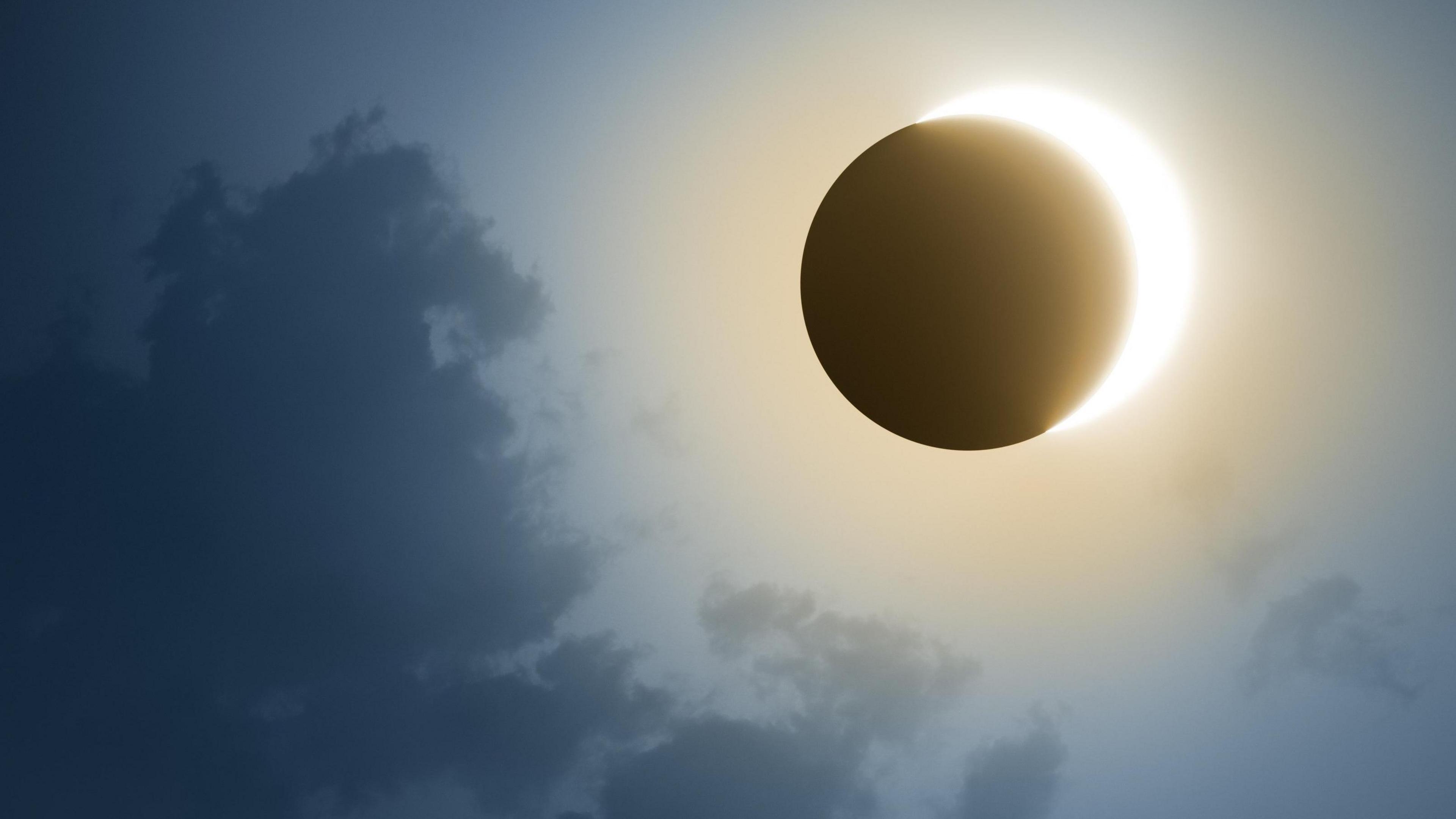
On August 12, 2026, the Moon will pass directly between Earth and the Sun, creating a major solar eclipse visible across parts of the world. While the eclipse will reach totality in areas including Iceland, Greenland and parts of Spain and Portugal, Morocco will experience a partial solar eclipse, with a large portion of the Sun covered by the Moon.
The August 12 eclipse is expected to be one of the year's most anticipated astronomical events. The path of totality will cross the Arctic, Iceland and parts of southern Europe, where observers will briefly see the Moon completely block the Sun. In Morocco, however, the event will remain partial, but that doesn't make it any less spectacular.
The eclipse will take place during the evening, making it particularly interesting for observers in Morocco as the Sun approaches the horizon.
According to astronomical calculations, the partial eclipse will begin at around 6:44 PM in Morocco, with the exact timing and degree of coverage varying depending on the location. The event will continue into the evening, with the Sun setting before the entire eclipse sequence is visible from some parts of the country.
The percentage of the Sun covered will also differ from one city to another. Casablanca is expected to see around 87% of the solar disk obscured, with the maximum occurring at approximately 7:43 PM. In Rabat, the maximum is also around 7:43 PM, with roughly 88% of the Sun covered. Tangier could see even greater coverage, reaching around 92%.
Further north and northeast, the eclipse will be even more pronounced, while cities further south will experience somewhat less coverage. The result will be a dramatic change in the appearance of the Sun as the Moon gradually moves across its disk.
How to watch it safely
There is one important rule: never look directly at the Sun during a partial solar eclipse without proper eye protection.
Regular sunglasses are not enough. Viewers should use certified solar eclipse glasses or an appropriate solar filter designed specifically for observing the Sun. Looking directly at the partially eclipsed Sun can cause serious and permanent eye damage.
For those in Morocco, Wednesday evening offers a rare opportunity to witness the Moon covering most of the Sun, just before the sky transitions into sunset.