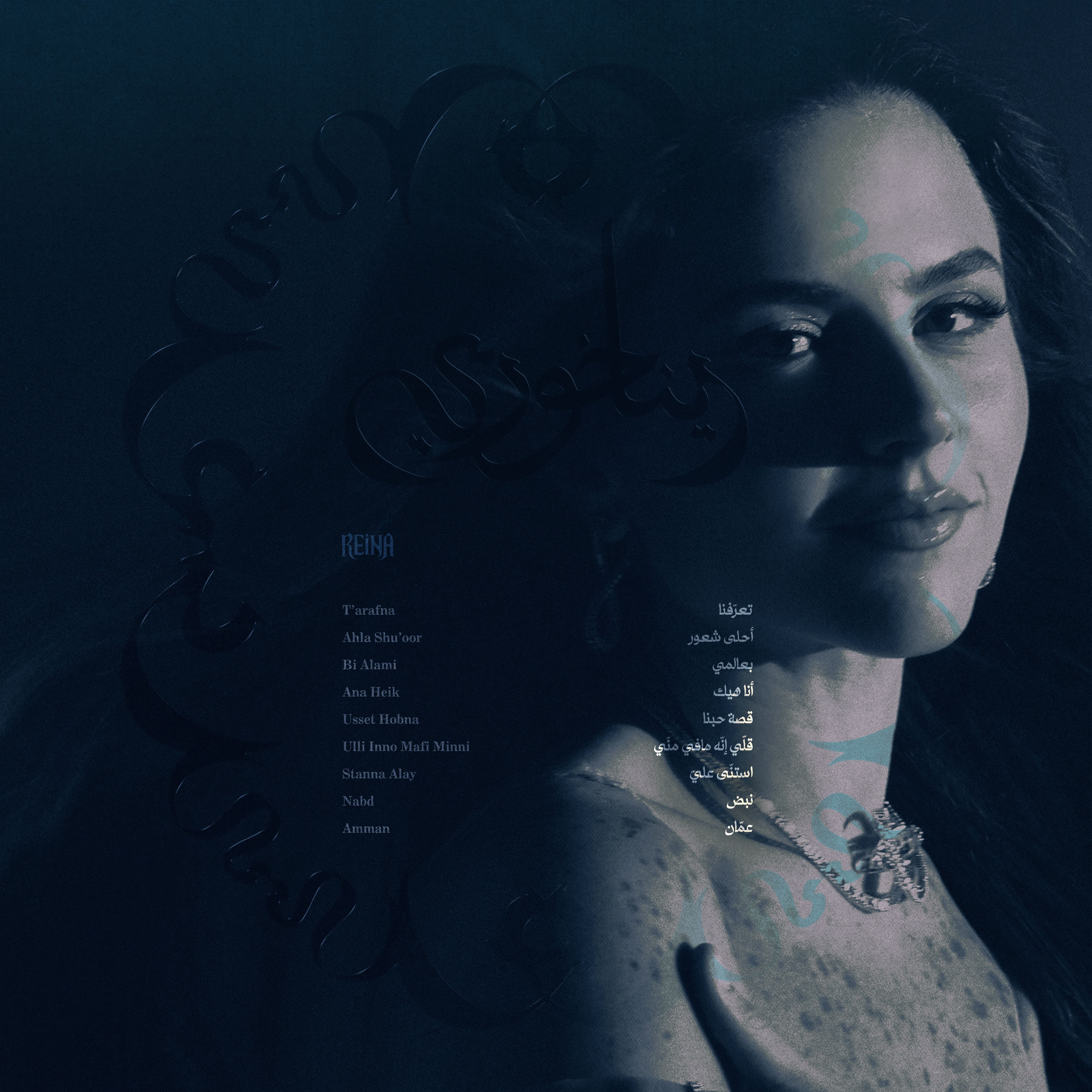
Some albums are made to chase a moment. ‘REINA’ is made to tell the truth. Reina Khoury’s debut full-length is her first long-form release, and it opens the door on everything that shaped her, from motherhood to her hometown of Amman.
The album starts with a whispered poem about motherhood, written by Reina herself, and from there it moves into “Ahla Shu’oor,” a title that translates to “best feeling in the world.” It’s the phrase she kept reaching for whenever people asked what becoming a mother felt like, and she built a song around it. The tracks that follow keep exploring the emotions and complexities of that chapter, while widening the lens to what it means to be a woman today.
It would be easy to file ‘REINA’ as a motherhood album, but it’s much broader than that. Across nine tracks, Reina moves through vulnerability, self-confidence, love, family, childhood memories and femininity, painting an intimate portrait of a woman in all her forms: an artist, a partner, a daughter, a mother. The result feels less like a collection of singles and more like a story told in order.
The confident center of that story is “Ana Heik,” the album’s focus track. Rhythmed by authentic Jordanian sounds, it’s a celebration of being unapologetically yourself, and it shares that energy with “Bi Alami.” On the softer side, “Usset Hobna” borrows a very classical Jordanian melody to tell a romantic love story, while “Ahla Shu’oor” leans into the romantic side of her writing. Between them, the record covers the full range of a woman’s personality without ever feeling scattered.
Reina also surrounded herself with creatives she looks up to. Cairokee’s Shereef Mostafa produced three of the songs and mixed the entire album, which gives the project a cohesive sound while keeping it rooted in the music she grew up on. After two years of work, it’s her most intentional project to date, a careful curation of the sounds and themes that made her the artist she is.
The album closes with “Amman,” an ode to the city that raised her and a thank-you to Jordan’s capital. It brings the story back to where it began: home. Start with “Ana Heik,” then listen to the whole thing from front to back, because the story only fully lands that way.