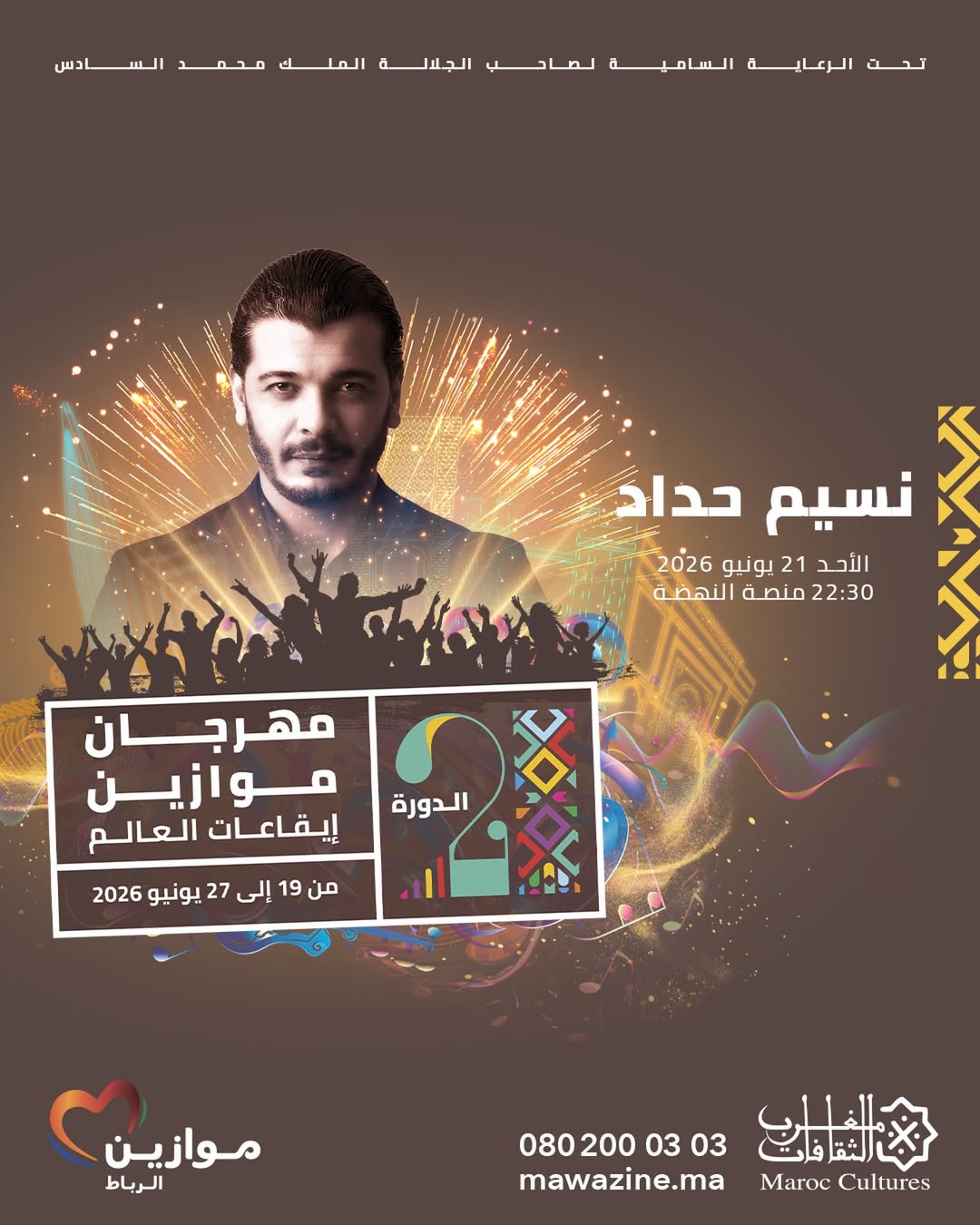
In a musical landscape increasingly shaped by speed and digital trends, some artists are choosing a different path, one rooted in preservation, memory, and cultural transmission. On June 21, Nassim Haddad will take the stage at Nahda for an evening dedicated to the depth and richness of Moroccan musical heritage. Known for his meticulous exploration of Aïta, one of Morocco’s most emblematic oral traditions, Haddad has built a unique artistic identity that bridges scholarly research with contemporary performance. The result is not simply a concert, but an immersive cultural experience where history, storytelling, and music intersect.
What distinguishes Nassim Haddad is the duality at the heart of his work. Both researcher and performer, he approaches Moroccan musical heritage with the precision of an academic and the sensitivity of an artist deeply connected to his cultural roots.
Over the years, Haddad has dedicated himself to documenting, preserving, and reinterpreting the art of Aïta, a powerful oral musical tradition historically carried through voices, poetry, and collective memory. Through this work, he has contributed to making a genre often confined to archives and regional circles more accessible to wider audiences, particularly younger generations seeking reconnection with Moroccan identity.
His performances stand out for their authenticity and attention to detail. Rather than modernizing tradition for the sake of trendiness, Haddad carefully preserves the emotional and poetic essence of Aïta while presenting it through a contemporary artistic lens capable of resonating with today’s audiences.
This balance between heritage and modern presentation has positioned him as one of the most compelling figures working within Morocco’s cultural preservation scene today. His approach transforms performance into education, inviting audiences not only to listen, but to understand the historical and social dimensions embedded within the music itself.
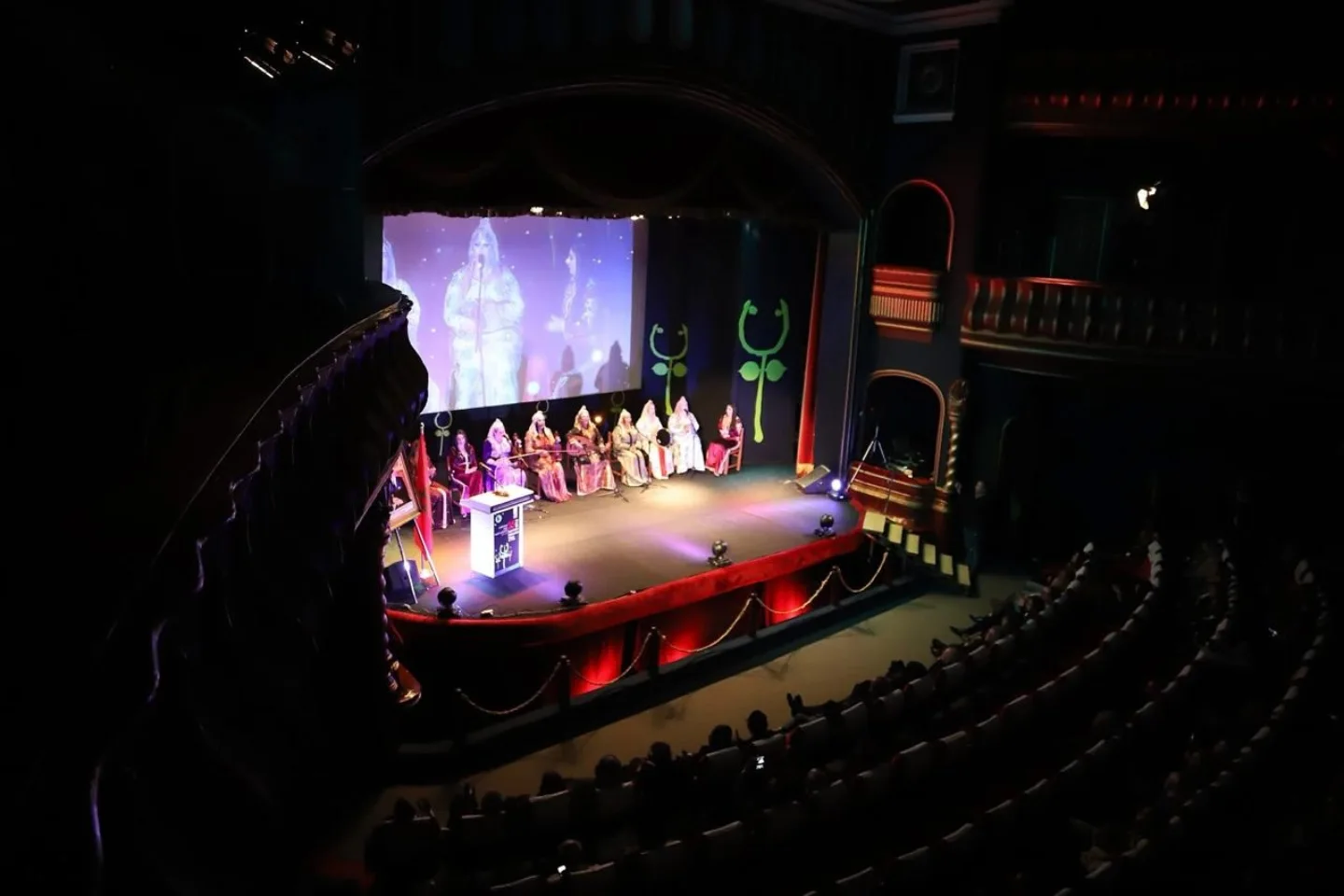
The upcoming evening at Nahda Stage is expected to embody exactly that philosophy. Audiences can anticipate a deeply Moroccan experience, one where the textures of traditional instrumentation, oral storytelling, and collective memory meet refined stagecraft and artistic direction.
More than entertainment, the performance promises to function as a living dialogue between generations, reconnecting contemporary audiences with sounds and narratives that remain central to Morocco’s cultural identity.
On June 21, Nahda Stage will become a meeting point between past and present, tradition and reinterpretation, scholarship and emotion.